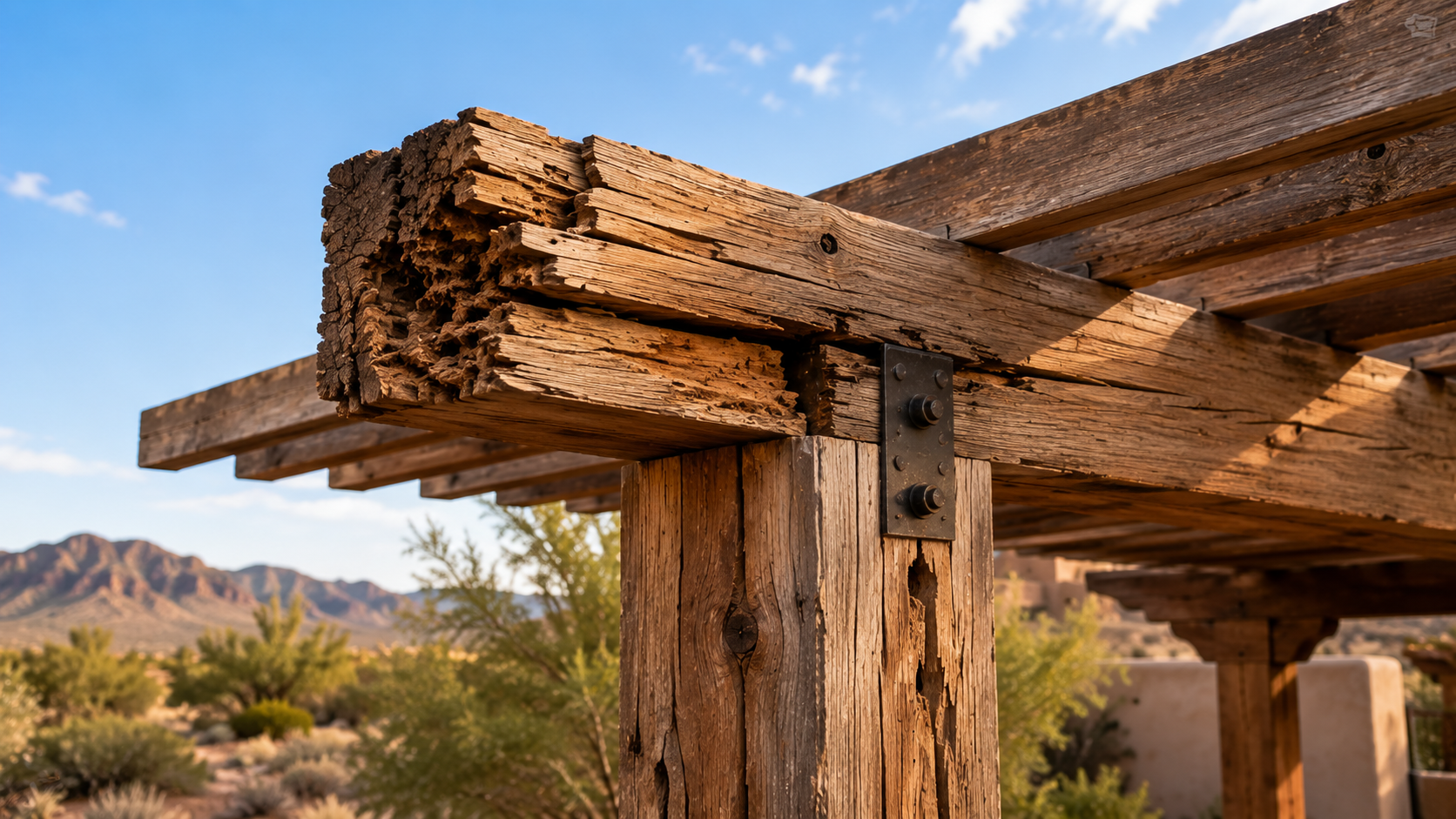
Understanding Post and Beam Damage Causes in New Mexico and the Southwest
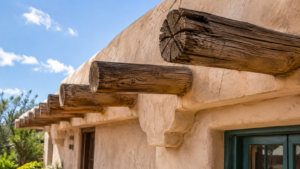
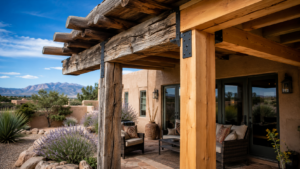
Post and beam construction has been used for generations because it’s strong, beautiful, and capable of supporting large structures with fewer walls and obstructions. You’ll find post and beam construction throughout Albuquerque, Santa Fe, and the Southwest in everything from patios and pergolas to porches, shade structures, carports, and custom homes.
But even the strongest timber structures don’t last forever.
Over time, many homeowners begin noticing cracks, sagging, discoloration, rot, or signs of pest activity in their beams and support posts. When that happens, one of the first questions people ask is:
“What causes post and beam damage in the Southwest?”
The answer is that several factors work together to wear down structural wood over time. The Southwest climate is particularly challenging because of intense UV exposure, extreme temperature swings, low humidity, seasonal moisture, and termites.
Understanding the most common post and beam damage causes can help you spot problems early, prevent expensive repairs, and extend the life of your structure.
In this guide, we’ll cover:
- The most common causes of post and beam damage
- Why wood beams crack in dry climates
- How sun and heat affect structural wood beams
- The connection between moisture and wood rot
- How termites damage support beams
- Ways to prevent structural wood damage in New Mexico
Whether you’re maintaining a pergola, deck, patio cover, porch, or other timber structure, these tips will help protect your investment for years to come.
Why Post and Beam Structures Face Unique Challenges in the Southwest
New Mexico and the Southwest offer incredible weather for outdoor living, but that same climate can be hard on wood.
Unlike wetter regions where moisture is the primary concern, homeowners here must deal with a combination of:
- Intense sun exposure
- Dry air
- Hot summers
- Cold winter nights
- Seasonal monsoon storms
- Wood-destroying insects
Over time, these conditions slowly weaken timber structures and contribute to many common forms of structural wood damage.
The good news is that most damage develops gradually, which means there is usually time to address problems before they become serious.
UV Exposure and Drying: One of the Leading Post and Beam Damage Causes
When homeowners ask about post and beam damage causes, UV exposure is often the biggest culprit.
New Mexico receives some of the highest levels of sunshine in the country. While that sunshine is great for outdoor living, it’s incredibly hard on exposed wood.
Every day, ultraviolet rays break down the wood’s natural fibers.
Over time, this can lead to:
- Surface checking (small cracks)
- Fading and discoloration
- Drying and brittleness
- Splitting along the grain
- Reduced structural strength
The process happens slowly, making it easy to overlook until the damage becomes significant.
Why Do Wood Support Beams Crack in Dry Climates?
One of the most common questions homeowners ask is:
“Why do wood support beams crack in dry climates?”
Wood naturally contains moisture.
When exposed to intense heat and dry air, that moisture gradually evaporates. As the wood dries out, it shrinks.
Because wood doesn’t dry evenly, stress develops inside the beam. Eventually, cracks begin to form.
Small cracks known as “checking” are normal.
However, larger cracks can become structural concerns when they:
- Extend deep into the beam
- Continue growing over time
- Occur near connections or fasteners
- Affect load-bearing areas
This is one reason regular inspections are so important.
How Sun and Heat Affect Structural Wood Beams
The Southwest sun doesn’t just fade wood—it changes it.
Years of exposure can make timber:
- More brittle
- Less flexible
- More prone to splitting
- More vulnerable to moisture intrusion
As wood fibers break down, the structure becomes weaker and less capable of handling heavy loads.
This is especially concerning for:
- Patio covers
- Pergolas
- Carports
- Deck supports
- Porch structures
Without proper sealing and maintenance, UV damage can significantly shorten the life of a post and beam structure.
Temperature Swings and Expansion Cycles
The Southwest experiences dramatic temperature changes.
Summer days can exceed 100 degrees while evenings cool significantly. Winter temperatures can vary even more dramatically.
These temperature changes cause wood to continually expand and contract.
Over time, this movement can create:
- Larger cracks
- Loose joints
- Fastener failures
- Structural shifting
- Beam distortion
The repeated stress weakens the entire system.
Many homeowners are surprised to learn that temperature fluctuations can be just as damaging as direct moisture.
Why Expansion and Contraction Matter
Wood is constantly moving.
Every heating and cooling cycle creates small amounts of movement inside the timber.
Although each movement is tiny, thousands of cycles over many years eventually create wear.
You may notice:
- Gaps between joints
- Separation around hardware
- Twisting beams
- Sagging areas
This type of structural movement often develops gradually and may not be obvious until the damage becomes extensive.
Moisture Is Still a Major Cause of Wood Beam Rot in New Mexico
Because New Mexico is dry, many homeowners assume moisture isn’t a concern.
Unfortunately, that’s not true.
Even in desert climates, moisture remains one of the most serious causes of post and beam damage.
Common Sources of Moisture Damage
Water can reach structural wood through:
- Monsoon storms
- Roof leaks
- Sprinkler systems
- Improper drainage
- Ground contact
- Condensation
Over time, moisture can become trapped inside the wood.
When that happens, decay begins.
Understanding Wood Beam Rot in New Mexico
Wood rot occurs when fungi begin breaking down damp wood fibers.
Once rot develops, the wood gradually loses strength and stability.
Signs of wood beam rot include:
- Soft spots
- Spongy wood
- Dark staining
- Crumbling surfaces
- Mold growth
- Musty odors
Many homeowners don’t notice rot until significant damage has already occurred.
Why Rot Often Starts Near Posts
Support posts are especially vulnerable because they often sit close to the ground.
Poor drainage around posts allows moisture to remain trapped.
Over time, the bottom portion of the post becomes vulnerable to:
- Decay
- Insect activity
- Structural weakening
Regular inspections can identify these problems before they spread.
Termites and Pest Damage to Structural Beams
Another major cause of structural wood damage in the Southwest is termite activity.
New Mexico is home to several species of termites that can attack wood structures.
Because termites work from the inside out, damage often goes unnoticed until it’s severe.
Signs of Termite Damage
Watch for:
- Hollow-sounding wood
- Mud tubes
- Small holes
- Sawdust-like debris
- Sagging sections
- Cracked paint or finishes
Termites often target areas already weakened by moisture.
This combination of moisture and pest activity can accelerate deterioration significantly.
Preventing Wood Rot and Termite Damage in Beams
Preventative maintenance is one of the most effective ways to protect structural wood.
Steps homeowners can take include:
- Keep wood away from standing water
- Maintain proper drainage
- Seal exposed timber regularly
- Repair leaks promptly
- Schedule termite inspections
- Remove wood debris near structures
These simple measures can dramatically extend the lifespan of post and beam systems.
Poor Installation Can Lead to Early Structural Damage
Not all post and beam problems are caused by weather.
Sometimes the issue starts during construction.
Improper installation can create weaknesses that become more noticeable over time.
Common installation mistakes include:
- Undersized beams
- Poor footing design
- Improper flashing
- Inadequate drainage
- Incorrect fasteners
- Insufficient structural support
Even quality materials can fail prematurely if installed incorrectly.
Aging Materials and Natural Wear
Every structure eventually experiences wear.
Even well-maintained timber will age over time.
As wood ages, it becomes more vulnerable to:
- Cracking
- Checking
- Insect activity
- Moisture intrusion
- Structural movement
This doesn’t necessarily mean replacement is needed, but it does increase the importance of inspections and maintenance.
How to Prevent Post and Beam Damage in the Southwest
Fortunately, many common problems are preventable.
Inspect Your Structure Annually
Look for:
- Cracks
- Rot
- Pest activity
- Loose hardware
- Sagging beams
Early detection can save thousands in repairs.
Apply Protective Finishes
Quality sealers and stains help protect wood from:
- UV exposure
- Moisture penetration
- Surface cracking
Reapply finishes according to manufacturer recommendations.
Maintain Proper Drainage
Keep water moving away from:
- Posts
- Footings
- Beam connections
Proper grading helps reduce moisture-related issues.
Address Small Repairs Quickly
Minor problems often become major repairs when ignored.
Fixing a small crack today is far less expensive than replacing a beam later.
Schedule Professional Evaluations
A professional inspection can identify hidden issues before they become serious structural problems.
Why Professional Inspections Matter
Many homeowners don’t notice damage until it’s advanced.
An experienced contractor can evaluate:
- Structural integrity
- Moisture damage
- Pest activity
- Beam movement
- Load-bearing concerns
This allows repairs to be made before major replacement becomes necessary.
Protect Your Investment Before Damage Gets Worse
Post and beam structures add beauty, character, and strength to homes throughout Albuquerque, Santa Fe, and the Southwest.
But the same climate that makes outdoor living enjoyable can slowly wear down structural wood over time.
Understanding the most common post and beam damage causes—including UV exposure, temperature swings, moisture, termites, poor installation, and aging materials—can help you catch problems early and avoid costly repairs.
With proper maintenance and regular inspections, many timber structures can remain strong and beautiful for decades.
Get a Professional Evaluation Before Damage Spreads
If you’ve noticed cracks, sagging, rot, or signs of deterioration in your beams or support posts, don’t wait for the problem to get worse.
Contact El Pueblo Woodworking today to schedule a professional evaluation and protect your structure before damage spreads.